
Hydraulic Clicker Press TW-9.4: Power, Precision, and Performance
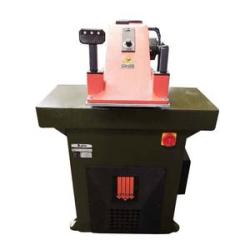
The Hydraulic Clicker Press TW‑9.4 is a game-changer for manufacturers and craftsmen in industries ranging from leather goods, footwear, and textiles to gaskets, foam, and packaging. With its blend of hydraulic strength, ergonomic design, automatic features, and safety elements, the TW‑9.4 boosts both output and quality while delivering a strong return on investment.Explore this deep-dive on its engineering, operation, use cases, maintenance, and buyer guidance. And when you're ready, head to maxinarytech.com to request a demo or quote.
What Is a Hydraulic Clicker Press
Clicker presses (also called swing-arm or rocker-arm presses) are specialized machines for die-cutting soft or semi-rigid materials like leather, rubber, foam, cardboard, and textiles into precise shapes using cutting dies.Unlike pneumatic or lever-operated models, hydraulic clicker presses like the TW‑9.4 offer smooth, powerful strokes at consistent pressure and with minimal operator effort. Their swing-arm design allows operators to position the press over the material easily, making them ideal for high-volume or medium-scale production.The TW‑9.4 adds advanced features—such as automatic stroke control, adjustable pressure and pressing time, and built-in safety systems—to elevate speed, accuracy, and productivity.
Why Custom Engineering Matters in the TW‑9.4
Full Hydraulic Power with Small Motor
Thanks to a high-pressure hydraulic pump driven by a modest 0.75 kW motor, the TW‑9.4 delivers 25 tons of consistent force resulting in fast cycle times with low energy consumption and reduced heat.
Auto Stroke-End Control
Sensors detect the die height during operation, automatically halting the ram as soon as the material is undercut. This eliminates guesswork, die wear, wasted cycles, and scrap boosting quality and operator confidence.
Electronic Pressure & Timing Precision
Settings for pressure and dwell time are managed by potentiometers and a control circuit. The result . Once the parameters are dialed in, every piece looks like the first—perfect for batch work and quality consistency.
Swing-Arm Accessibility
A 500 mm swing radius means workers can load/unload material comfortably without awkward reaching or bending. Rotate the arm away from your body, place material, rotate back, and press. It's ergonomic efficiency at its best.
Safety Built for Real-World Work
The TW‑9.4 only initiates a cut cycle when both hand switches are pressed simultaneously—ensuring hands stay clear of the ram. With clearly marked cutting zones and emergency stop functionality, it meets safety regulations and protects operators.
How the TW‑9.4 Works: A Step-by-Step Guide
-
Material Preparation Place material and die on the pressed surface. Proper die placement is key—and easier with the spacious worktable.
-
Adjust and Fine-Tune Use the pressure potentiometer to select desired cutting force. Set stroke-end sensitivity and press time—often less than 5 seconds per cycle in production mode.
-
Safe Dual-Hand Activation With both hands on the buttons, the hydraulic ram descends smoothly, applying the programmed force.
-
Automatic Stop As sensors detect the die’s height, the ram halts—preventing overstroke and preserving die life.
-
Release and Repeat The arm quickly swings up, material is removed, and next piece loaded for continuous efficiency.
This workflow enables fast, repeatable production with minimal operator training and consistent results.
Industry Applications That Benefit from the TW‑9.4
Footwear Manufacturing
Soling, insoles, heel counters, and appliqués all require smooth edges and exact alignment. The TW‑9.4 is perfect for fast runs of consistent pieces.
Leather Goods
Handbags, belts, wallets, and straps require both clean aesthetic cuts and repeat lengths—especially helpful during pattern production or small batch runs.
Textile & Apparel
Die-cutting fabric layers for accessories or garment components ensures consistent fit and tight seams.
Gaskets & Industrial Sealing
Accurate, flat gasket pieces are essential in sectors like automotive, HVAC, plumbing, and packaging machinery.
Foam Packaging & Crafts
From custom inserts to foam flowers and decorative pieces, the TW‑9.4 improves speed and precision—ideal for creative studios or mid-volume shops.
Key Benefits: Why Choose the TW‑9.4
-
Productivity Gains Quick die swaps and preset cut cycles cut jobs from minutes to seconds—perfect for fast-paced environments.
-
Quality Consistency Electronic control ensures every product matches the first—ideal for rigid tolerances and branded batches.
-
Material Savings Minimizing scrap thanks to precise cutting and auto-stop mechanisms.
-
Energy Efficiency Someone 0.75 kW motor making 25-ton cuts uses far less power and generates less noise/heat.
-
Safety by Design Dual-activate switches, emergency stop, and safety labels safeguard operators daily.
-
Space-Savvy The TW‑9.4 offers 25-ton capacity with a smaller footplate than larger hydraulic or CNC layouts.
A Look Inside: Maintenance & Longevity
Proper care ensures your TW‑9.4 runs smoothly for years, and here’s how:
-
Hydraulic Maintenance – Replace hydraulic fluid annually, or at specified intervals – Inspect and renew hoses/seals as needed – Clean or replace inline filters
-
Ram Calibration – Clean sensors and recalibrate stroke-end for accuracy
-
Swing-Arm Lubrication – Grease pivot points and perform visual inspections monthly
-
Die & Table Care – Clean the die surface – Check die filings and burrs; recondition or replace
-
Safety Checks – Test dual switches and emergency stop weekly – Inspect electrical panel and controls quarterly
With proper drift, the TW‑9.4 can remain a valued production asset for well over 10 years.
ROI: What to Expect Cost-Wise
-
Typical Price Models comparable to the TW‑9.4 start around US $3,800, FOB factory.
-
Operational Savings – 20–30% faster cycle times – 20–30% less material waste – Reduced electricity usage from a smaller motor – Lower labor overhead due to simpler operation
-
Built-In Reliability Long-term durability translates to stable operations and fewer replacements—an extended return horizon.
Manufacturers often see ROI within 6–12 months, especially when upgrading from manual or older pneumatic/lever machines.
Setting Up Your TW‑9.4
Preparation
Select a stable, level concrete or steel foundation with 500 mm clearance around the arm swing.
Power Supply
Available in 220 V or 380 V, three-phase, 50 Hz configurations—check for compatibility with your electric system.
Calibration & Testing
Initial setup requires filling hydraulic oil, calibrating sensors, and performing sample cuts to set pressure/time presets.
Operator Training
Upto 2 hours of training (or one shift-long), covering safety, control use, and routine checks—enough for confident, high-quality operation.
Common Issues & Troubleshooting
-
Erratic Cuts Check sensors and fluid levels
-
Ram Stalls Inspect hoses, filters, or motor load
-
Hydraulic Leakage Tighten or replace couplings
-
Electrical Glitches Test power supply and internal relays
-
Arm Binding Re-lubricate or free stuck pivot points
Routine inspection prevents most issues keeping downtime to a minimum.
Sustainability & Shop Advantages
-
Low Energy Use: 0.75 kW hydraulic system is highly efficient.
-
Material Conservation: Auto-stop and consistent cutting minimize waste.
-
Ergonomic Design: Less strain on operators, fostering safety and productivity.
-
Durability: Long service life reduces replacement and environmental impact.
Use Case: Leather Wallet Manufacturer
Business Need: Standardize and speed up leather pattern production. Solution: Add two TW‑9.4 presses for total output. Results:
-
40% cycle time reduction
-
25% fewer wasted pattern cuts
-
Quicker training, fewer mistakes
-
ROI achieved in under a year
This is a prime example of how the TW‑9.4 can transform workshops of varying scale.
Future-Proofing with the TW‑9.4
-
Customizable Upgrades: Table inserts, extended arm versions, oil-free variants.
-
Integration Ready: Supports sensor/data retrofits for automated recording.
-
Network-Ready: Optional smart console for interfaces to MES/ERP systems.
Whether you're growing your leather workshop or ramping up industrial gasket production, the Hydraulic Clicker Press TW‑9.4 delivers balanced power, fine precision, and ergonomic performance in a manageable machine. It eliminates guesswork with auto-stop functionality and keeps operators safe—all while reducing waste and energy use.
To explore the TW‑9.4, get demo cuts, view technical details, or request pricing, go to maxinarytech.com.
Here are 5 FAQs for the Hydraulic Clicker Press TW-9.4:
What is the maximum cutting force of the TW-9.4 Hydraulic Clicker Press?
Answer: The TW-9.4 delivers a maximum cutting force of approximately 9 tons, suitable for cutting leather, fabric, rubber, and other soft materials with precision.
What are the dimensions of the cutting area on the TW-9.4?
Answer: The cutting bed typically measures around 400mm x 500mm, providing a spacious working area for various die sizes.
Is the TW-9.4 easy to operate for beginners?
Answer: Yes, the TW-9.4 is designed for user-friendly operation with hydraulic controls that allow smooth and consistent pressing, making it accessible even for users with minimal experience.
What materials can the TW-9.4 efficiently cut?
Answer: It can cut materials like leather, fabric, foam, rubber, plastics, and composites, commonly used in footwear, upholstery, and automotive industries.
What maintenance does the TW-9.4 require?
Answer: Regular maintenance includes checking and topping up hydraulic oil, cleaning the cutting surface, inspecting hoses and fittings for leaks, and lubricating moving parts to ensure long-term reliability.