
AUTOMATIC RIVETING MACHINE TH-727
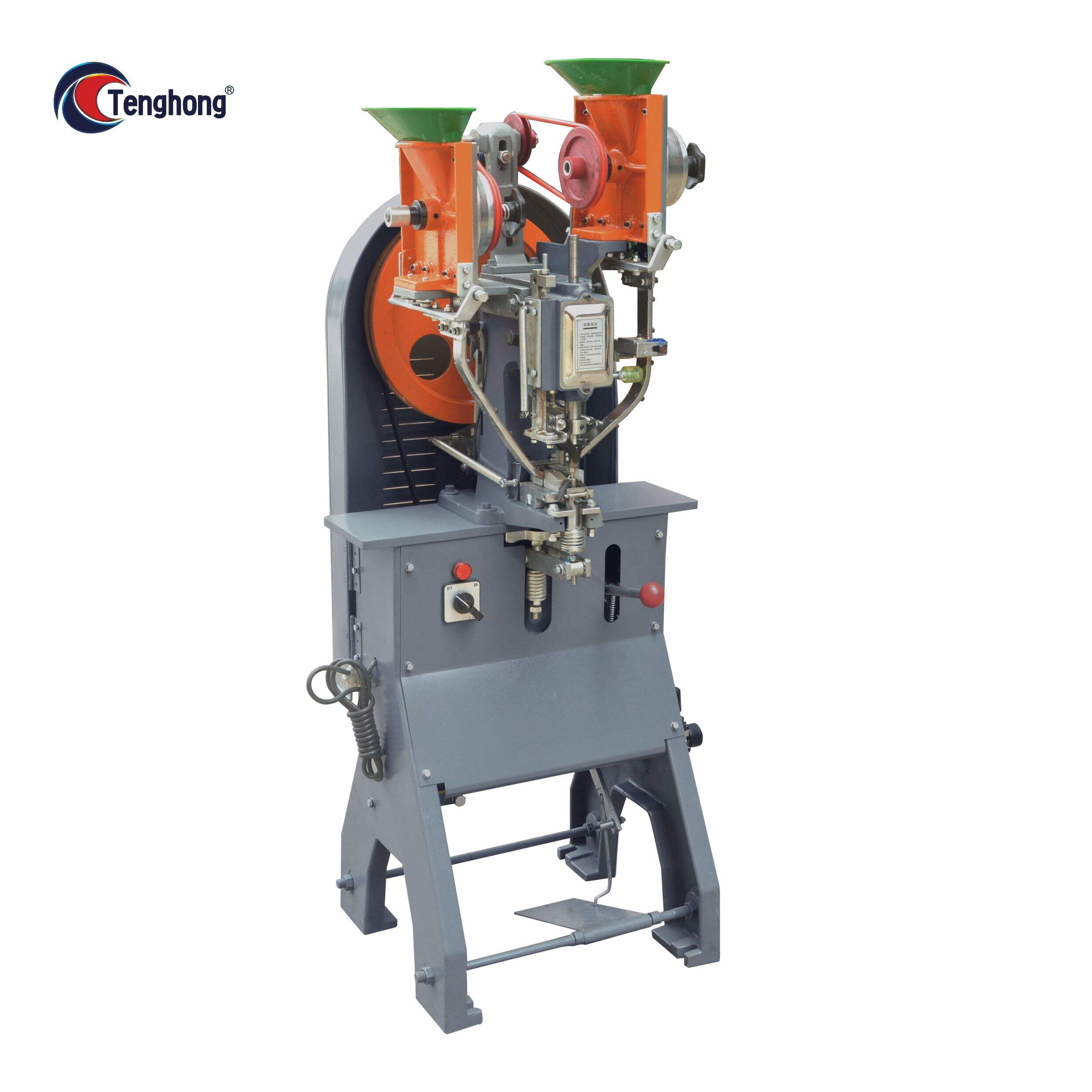
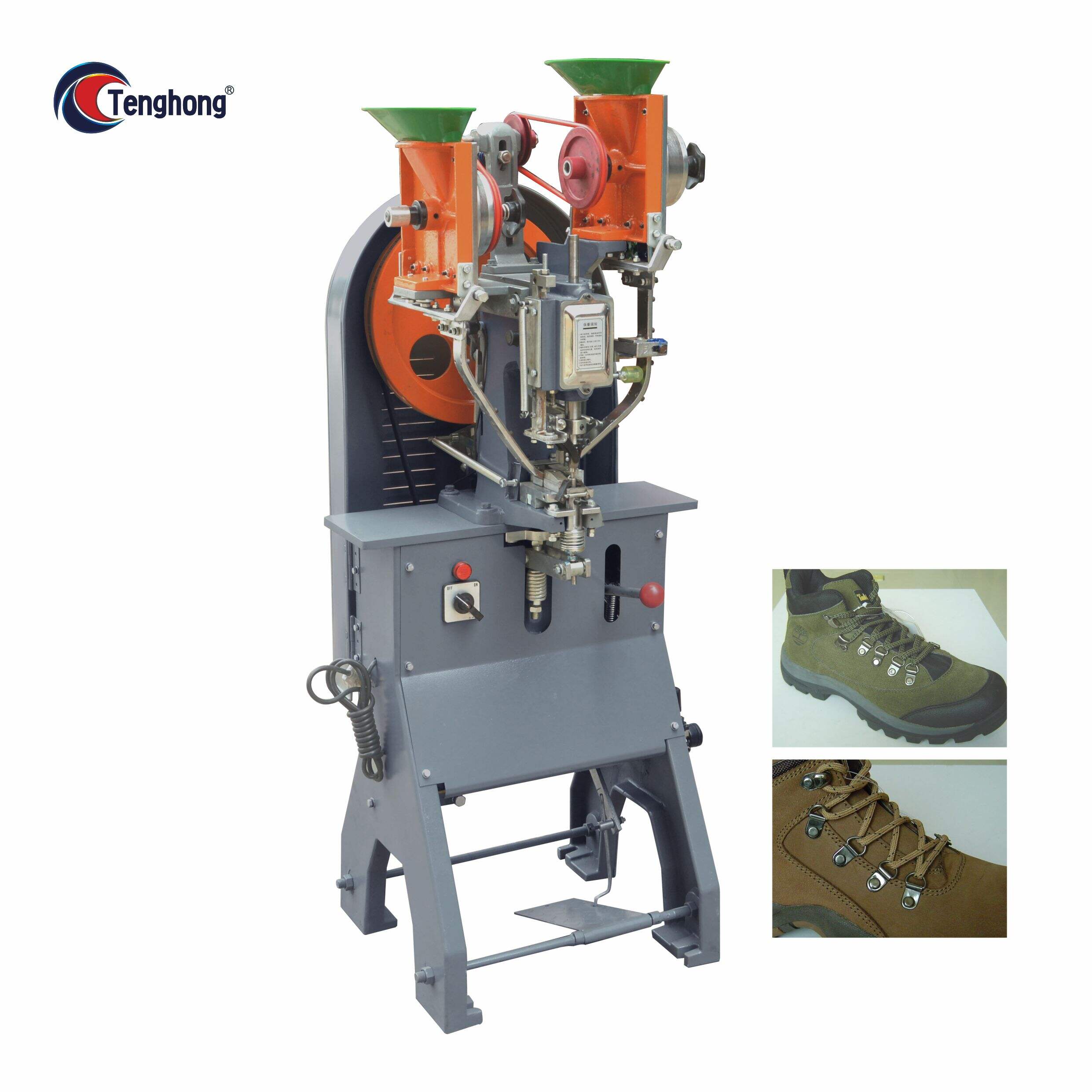


MACHINE NAME: Suited for automatically setting eyelets/grommets on canvas, tarpaulin advertising banners, garments, shoes, belts, handbags, paper bags, etc.
MODEL NO: TH-727
BRAND: TENGHONG
FEATURES
- Suited for automatically setting eyelets/grommets on canvas, tarpaulin advertising banners, garments, shoes, belts, handbags, paper bags, etc.
FEATURE
This model features automatic feeding of both eyelets and necked washers, precise positioning, stable performance and good eyeleting effect.
TECHNICAL PARAMETER
- Snap fastener face diameter : Φ6-13mm
- Snap fastener diameter : Φ3-8mm
- Snap fastener length : 3-8mm
- Throat depth : 130mm
- Motor : 1/2HP
- Dimension : 650x530x1500mm
- N.W. : 160kg
- G.W. : 220kg
The Automatic Riveting Machine represents a highly advanced and reliable solution designed to facilitate the efficient attachment of hollow rivets across a broad range of industries. Combining state-of-the-art automation with robust construction and precision engineering, this machine streamlines production workflows, enhances quality, and reduces labor intensity. This comprehensive product overview covers every aspect of the machine, from its core applications and standout features to detailed technical specifications and operational benefits, providing manufacturers with a thorough understanding of why the Automatic Riveting Machine is an indispensable tool in modern manufacturing processes.
Applications
The Automatic Riveting Machine is engineered to serve diverse industrial applications requiring consistent, high-quality riveting of hollow rivets. Its design accommodates a wide variety of materials and product types, making it suitable for many manufacturing sectors:
Garment Industry
In garment manufacturing, rivets are commonly used to strengthen and decorate items such as jeans, jackets, and other apparel. This machine automates the riveting process, ensuring every rivet is securely attached with uniform pressure and alignment, which is essential for maintaining garment quality and durability.
Footwear Production
Shoes often require rivets for structural reinforcement and aesthetic detailing, particularly in the upper sections and decorative components. The Automatic Riveting Machine facilitates rapid and consistent rivet application, reducing production times while ensuring a high level of craftsmanship.
Leather Goods
Products such as belts, handbags, wallets, and gloves extensively use hollow rivets to attach hardware or reinforce seams. The machine’s versatility in handling different rivet sizes and materials makes it ideal for leather goods manufacturers seeking precision and efficiency.
Plastic Articles
Certain plastic components benefit from rivet fastening for assembly or decoration. The machine’s automated feeding and precise riveting mechanism enable the secure attachment of rivets without damaging delicate plastic materials.
Paper Materials
In packaging and paper goods manufacturing, rivets are sometimes employed for fastening tags, labels, or other elements. The machine’s gentle yet effective riveting action supports these lighter materials without tearing or deforming them.
Tags and Labels
Many products feature tags or labels secured with hollow rivets for branding or informational purposes. This machine ensures that the rivets attach firmly, maintaining a professional finish and improving product presentation.
Features
The Automatic Riveting Machine is designed with numerous features that optimize productivity, safety, and ease of use. These characteristics contribute to its widespread adoption in demanding manufacturing environments.
Easy Operation
Engineered for user convenience, the machine features a straightforward control interface, enabling operators with minimal training to quickly become proficient. The intuitive design reduces setup and adjustment times, helping factories maintain smooth workflows.
Safety Mechanisms
Worker safety is paramount. The machine includes built-in safety guards and emergency stop features that protect operators from injury during operation. The design minimizes exposure to moving parts, reducing the risk of accidents.
High Efficiency and Speed
Automatic feeding systems for both rivets and necked washers significantly accelerate the riveting process, allowing for large-volume production without compromising accuracy. This automation reduces manual handling, minimizes downtime, and improves overall throughput.
Precision Riveting
The machine’s hydraulic or pneumatic riveting system ensures consistent application of force, resulting in secure, uniform rivet attachments. This precision helps maintain product integrity, especially important for items subject to stress or wear.
Versatile Rivet Handling
Capable of accommodating a range of snap fastener face diameters from 6 to 15 mm and snap fastener diameters from 3 to 5 mm, the machine can adapt to different product requirements. Rivet length adaptability from 3 to 12 mm further extends its versatility.
Adjustable Throat Depth
With a throat depth of 130 mm, the machine can handle larger or thicker materials, making it suitable for a wide range of product sizes and configurations.
Robust Motor Performance
Equipped with a reliable 1/2 HP motor, the machine delivers consistent power for uninterrupted operation, enhancing productivity and reducing maintenance frequency.
Compact Design and Weight
Though robust, the machine’s dimensions of 700 mm by 530 mm by 1500 mm and net weight of 160 kg make it relatively compact and manageable within production lines. The gross weight of 220 kg reflects its sturdy construction, ensuring durability and long service life.
Technical Parameters
A clear understanding of the machine’s specifications is essential for integrating it into manufacturing processes effectively:
-
Snap Fastener Face Diameter: Φ6-15 mm — suitable for small to medium-sized rivets.
-
Snap Fastener Diameter: Φ3-5 mm — accommodates a variety of rivet thicknesses.
-
Snap Fastener Length: 3-12 mm — supports diverse material thicknesses.
-
Throat Depth: 130 mm — allows processing of thick or bulky materials.
-
Motor Power: 1/2 HP — balances power consumption and performance.
-
Dimensions: 700 mm (length) × 530 mm (width) × 1500 mm (height) — compact footprint for factory floors.
-
Net Weight: 160 kg — manageable size for installation and movement.
-
Gross Weight: 220 kg — solid construction for stability.
Operational Process
The Automatic Riveting Machine’s operation involves a streamlined sequence designed for optimal speed and accuracy:
Material Preparation
Operators position the workpieces, such as garments, belts, or tags, within the machine’s throat area. The adjustable throat depth allows accommodation of various thicknesses and sizes.
Automatic Feeding
Both the rivets and necked washers are fed automatically into the riveting area via dedicated feed systems. This automation eliminates the need for manual loading, reducing operator fatigue and speeding up the production process.
Riveting Action
Once the workpiece and rivet are in position, the machine activates the riveting mechanism, pressing the rivet into place with controlled force. This ensures a secure attachment without damaging the materials.
Cycle Completion and Reset
After the riveting stroke completes, the machine resets automatically, ready for the next operation. This continuous cycle enables high-volume production with minimal intervention.
Benefits
The Automatic Riveting Machine delivers numerous advantages that translate into tangible business value:
Increased Productivity
The automation of rivet and washer feeding, combined with rapid riveting cycles, boosts output levels significantly compared to manual or semi-automatic alternatives.
Improved Quality Consistency
Precision hydraulic or pneumatic riveting guarantees uniform rivet application, enhancing product reliability and customer satisfaction.
Labor Savings
By reducing manual handling and simplifying operations, the machine lowers labor costs and minimizes the risk of operator error or injury.
Versatility
Its capacity to handle various rivet sizes and materials enables manufacturers to diversify their product offerings without investing in multiple machines.
Reduced Material Waste
Accurate riveting minimizes mistakes and material damage, leading to less scrap and better cost efficiency.
Ease of Maintenance
The machine’s simple construction and accessible components facilitate routine maintenance and troubleshooting, ensuring long service life and minimal downtime.
Industry Relevance
The Automatic Riveting Machine’s features and capabilities position it as a valuable asset in several key industries:
Apparel and Fashion
From denim jeans to high-fashion garments, rivets are both functional and decorative. The machine supports fast, reliable production in this highly competitive market.
Footwear Manufacturing
The shoe industry benefits from consistent rivet placement to maintain structural integrity and aesthetic appeal.
Leather Crafting
Leather products, often requiring durable fastening, see improved quality and production speed using this machine.
Packaging and Labels
The machine’s ability to handle paper and plastic materials opens opportunities in packaging, allowing fast and secure attachment of tags and labels.
Automotive and Accessories
Certain auto components and accessories require rivet fastening, a process simplified by the machine’s adaptability.
Installation and Training
Installation
The Automatic Riveting Machine is designed for straightforward installation. Its relatively compact size allows for easy integration into existing production lines. Manufacturers should ensure stable, level surfaces and access to a 220V power supply for optimal operation.
Operator Training
Due to its user-friendly design, training requirements are minimal. Operators can be trained to operate the machine safely and efficiently within a short period, focusing on basic setup, material handling, and routine maintenance.
Safety Considerations
The machine incorporates several safety features:
-
Protective guards around moving parts prevent accidental contact.
-
Emergency stop buttons enable immediate shutdown in case of emergency.
-
Clear operational indicators and instructions reduce the risk of misuse.
-
The machine’s design ensures one action corresponds to one operation, preventing simultaneous unintended movements.
Maintenance and Troubleshooting
Routine maintenance extends machine life and preserves performance:
-
Regular lubrication of moving parts prevents wear.
-
Periodic inspection of the feeding mechanisms ensures smooth operation.
-
Checking electrical components and connections prevents downtime.
-
Easy access to components facilitates quick repairs or part replacements.
Common troubleshooting includes addressing feeding jams or inconsistent riveting pressure, both manageable through simple adjustments.
Environmental and Economic Impact
By automating rivet attachment, the machine reduces energy consumption relative to manual labor. Efficient use of materials decreases waste, contributing to environmentally responsible manufacturing. The economic benefits of reduced labor costs, increased output, and lower defect rates enhance overall profitability.
Customization and Upgrades
Manufacturers can customize the machine to meet specific production needs, including different rivet types, alternative power sources, or integration with broader automated production lines. Upgrades to control systems or feed mechanisms can be implemented as technology advances.
The Automatic Riveting Machine is a versatile, efficient, and reliable solution tailored to meet the diverse needs of modern manufacturers across garments, footwear, leather goods, plastic articles, and paper materials. Its combination of automation, safety, and precision delivers significant productivity gains while maintaining high product quality. Investing in this machine enables businesses to enhance production capacity, reduce labor demands, and achieve consistent riveting performance, ultimately contributing to improved product appeal and market competitiveness.
No posts found